
Book Title: The Four Agreements: A Practical Guide to Personal Freedom
Author: Don Miguel Ruiz
Genre: Self-Help
Publication Date: 1997
Have you ever wondered why we often feel trapped by our thoughts and behaviors? Why do we repeatedly fall into the same patterns that cause us suffering?
In his groundbreaking book “The Four Agreements: A Practical Guide to Personal Freedom”, Don Miguel Ruiz offers a powerful code of conduct that can rapidly transform our lives to a new experience of freedom, true happiness, and love.
“The human mind is like a fertile ground where seeds are continually being planted. The seeds are opinions, ideas, and concepts. You plant a seed, a thought, and it grows.”
As someone who has spent years exploring personal development literature, I can confidently say this compact wisdom guide stands among the most impactful books I’ve encountered.
Introduction: Ancient Wisdom for Modern Living
In today’s hyper-connected yet spiritually disconnected world, we’re constantly bombarded with messages about who we should be and how we should live. Amid this chaos, Ruiz’s book emerges as a beacon of clarity, offering four deceptively simple principles that challenge the foundations of our self-limiting beliefs.
Published in 1997, The Four Agreements draws on ancient Toltec wisdom to deliver a practical philosophy for everyday life. Don Miguel Ruiz, a surgeon turned spiritual teacher following a near-death experience, distills complex spiritual concepts into digestible guidance that readers from all backgrounds can apply immediately.
What makes this book truly exceptional isn’t just its profound wisdom, but its accessibility. At just under 160 pages, it’s a quick read, yet its impact reverberates long after you’ve turned the final page. The book has sold over 8 million copies worldwide and has been translated into 46 languages—a testament to its universal appeal and transformative potential.
Plot Summary: The Journey to Personal Freedom
Rather than a traditional narrative, The Four Agreements presents a framework for personal transformation built around four foundational principles. Ruiz begins by explaining how we are domesticated from childhood, absorbing countless agreements about reality that form our personal “Book of Law”—a rigid belief system that dictates our behavior and limits our potential.
The book is divided into three parts:
- Toltec Wisdom and The Dream of the World – Ruiz introduces the concept of “domestication” and how we create a dream of reality based on others’ beliefs.
- The Four Agreements – The core of the book that details each agreement and provides practical guidance for implementation.
- The Toltec Path to Freedom – Strategies for breaking old agreements and embracing new ones.
Throughout this journey, Ruiz shows how these four simple agreements can help break thousands of agreements we’ve made with ourselves, others, and life itself that create needless suffering. By adopting these new agreements, we can experience remarkable transformations in how we experience life.
The Four Agreements Explained
1. Be Impeccable With Your Word
The first agreement sounds straightforward but proves profoundly challenging in practice. Being impeccable with your word means speaking with integrity and saying only what you mean. Ruiz explains how words have power—they can create and they can destroy. When we gossip about others or use self-deprecating language, we’re misusing this power.
What struck me most about this section was Ruiz’s explanation of how we use words against ourselves more cruelly than we would ever use them against someone we love. He demonstrates how self-judgment and internal criticism become self-fulfilling prophecies that limit our potential.
2. Don’t Take Anything Personally
The second agreement might be the most liberating of all. Ruiz explains that nothing others do is because of you—it’s a projection of their reality. When we take things personally, we make ourselves susceptible to needless suffering.
I found this section particularly enlightening because it reveals how much emotional energy we waste reacting to others’ behaviors. By understanding that others’ actions and comments are reflections of their agreements, not our worth, we gain tremendous freedom. This doesn’t mean becoming cold or detached, but rather understanding the true source of others’ behaviors.
3. Don’t Make Assumptions
How many conflicts arise from assumptions we make about others’ thoughts, feelings, and motives? The third agreement tackles this universal human tendency to fill information gaps with our interpretations, usually negative ones.
Ruiz provides practical advice for replacing assumptions with clear communication. By having the courage to ask questions and express what we want, we avoid the drama, misunderstandings, and emotional poison that assumptions create. This section challenged me to recognize how many of my relationship difficulties stemmed from unverified assumptions rather than reality.
4. Always Do Your Best
The final agreement—always do your best—serves as the action component that enables the other three. Ruiz clarifies that “your best” varies from moment to moment depending on your circumstances, energy, and state of mind. This agreement frees us from self-judgment when we fall short of perfection.
What makes this section particularly powerful is how it transforms action into its reward. When we do our best without attachment to results, we experience satisfaction regardless of outcome. This agreement also prevents the self-abuse that comes from failing to honor the other three agreements. When we inevitably slip, we simply recommit to doing our best.
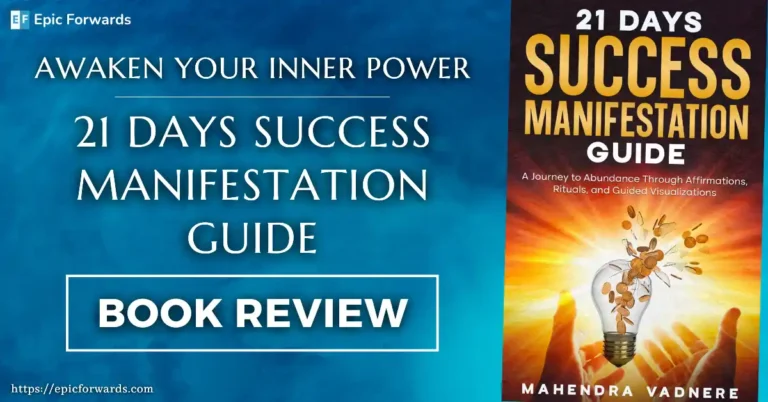
You would also like to read: A Review of “21 Days Success Manifestation Guide”
Character Development: The Hero’s Journey Within
Though The Four Agreements isn’t a character-driven narrative, it cleverly positions the reader as the protagonist in their transformational journey. Ruiz introduces various “characters” we all play—the Judge, the Victim, and the authentic Self seeking liberation.
The Judge represents our internalized critical voice that constantly evaluates and punishes us for failing to meet impossible standards. The Victim accepts this judgment as truth and suffers accordingly. Through practicing the four agreements, we gradually silence the Judge and free the Victim, allowing our authentic Self to emerge.
What I appreciate most about Ruiz’s approach to character development is his compassion. He acknowledges the difficulty of breaking long-established patterns while offering practical strategies to develop new habits of mind. He presents transformation not as an overnight revolution but as a patient process of reclaiming personal power.
Themes & Writing Style: Accessible Wisdom
Key Themes
Several powerful themes weave throughout The Four Agreements:
Personal Freedom – The core theme is liberation from self-limiting beliefs and social conditioning.
Awareness – Ruiz emphasizes becoming conscious of how we create our experience through our agreements.
Authenticity – By breaking agreements that don’t serve us, we reclaim our authentic nature.
Transformation – The book offers a practical path to changing our entire experience of life.
Self-love – As we implement the agreements, we naturally develop greater compassion for ourselves and others.
Writing Style
Ruiz’s writing style is refreshingly straightforward and conversational. He avoids complex jargon, making ancient wisdom accessible to modern readers. The book uses metaphors effectively—particularly the central metaphor of “agreements” as the unconscious rules we live by.
Short chapters, clear explanations, and practical examples make the concepts easy to grasp. While the ideas themselves are profound, the presentation is never pretentious or overly academic. Ruiz writes with the warmth of a wise mentor rather than the distance of a guru.
Janet Mills, as co-author, likely contributed to this accessibility. Her expertise in translating esoteric wisdom into practical guidance helps bridge cultural gaps between ancient Toltec teachings and contemporary readers.
Who Should Read The Four Agreements?
This book is ideal for:
- Anyone feeling trapped by negative thought patterns or limiting beliefs
- Individuals struggling with conflict in personal or professional relationships
- Seekers of practical spiritual wisdom without religious dogma
- People recovering from trauma or emotional wounds
- Anyone interested in personal growth but overwhelmed by complex philosophical texts
If you’ve appreciated books like Eckhart Tolle’s “The Power of Now,” Byron Katie’s “Loving What Is,” or Paulo Coelho’s “The Alchemist,” you’ll likely resonate with The Four Agreements. While similar in their transformational aims, Ruiz’s work stands out for its remarkable clarity and immediate applicability.

The Four Agreements
In The Four Agreements, bestselling author don Miguel Ruiz reveals the source of self-limiting beliefs that rob us of joy and create needless suffering. Based on ancient Toltec wisdom, The Four Agreements offer a powerful code of conduct that can rapidly transform our lives to a new experience of freedom, true happiness, and love.
Key Learnings from The Four Agreements
- Awareness precedes transformation – We must first recognize our self-limiting agreements before we can change them.
- Words have the power to create and destroy – Our internal dialogue shapes our reality more than we realize.
- Most suffering stems from taking things personally – Others’ actions reflect their reality, not our worth.
- Assumptions create unnecessary drama – Clear communication prevents the majority of interpersonal conflicts.
- Perfection isn’t the goal; consistent effort is – Doing our best under varying circumstances leads to sustained growth.
- Freedom comes from breaking old agreements – Liberation requires conscious choice rather than automatic reaction.
- Self-acceptance accelerates transformation – Judging ourselves for failing to perfectly implement the agreements only creates more suffering.
The Impact on Personal Growth
What distinguishes The Four Agreements from countless other self-help books is its focus on foundational principles rather than specific techniques. Instead of offering situational advice that might work in some contexts but not others, Ruiz provides a framework that can be applied to virtually any circumstance.
I’ve personally witnessed the book’s transformative effect not only in my life but in the lives of friends and family members. One friend, a chronic worrier who took everything personally, found the second agreement life-changing. After practicing “don’t take anything personally” for several months, she reported significantly reduced anxiety and improved relationships.
The beauty of Ruiz’s approach is its scalability. You can apply these agreements to minor annoyances (not taking a driver’s rudeness personally) or to major life challenges (communicating clearly during relationship conflicts). The principles work equally well in personal and professional contexts.
“Real love is accepting other people the way they are without trying to change them.”
Conclusion: A Timeless Guide to Freedom
In a world of increasingly complex self-help methodologies, The Four Agreements stands out for its elegant simplicity. Don Miguel Ruiz has gifted us a practical distillation of ancient wisdom that loses none of its power through accessibility.
What makes this book truly special is that it doesn’t require you to adopt any particular belief system. Whether you’re religious, spiritual-but-not-religious, agnostic, or atheist, the four agreements offer practical value. They work not because they align with any dogma, but because they address fundamental patterns of human thought and behavior.
After finishing the book, I found myself returning to it repeatedly, each reading revealing new layers of insight. The agreements themselves have become touchstones I use to navigate challenging situations. When I catch myself in anxious rumination, I ask: “Am I taking something personally that isn’t about me?” When conflict arises, I consider: “What assumptions am I making here?”
The Four Agreements isn’t just a book to read; it’s a philosophy to live by. While perfect implementation may be impossible, even partial application of these principles can dramatically reduce suffering and increase joy. In a culture obsessed with complexity, Ruiz reminds us that profound transformation often begins with simple shifts in perspective.
If you’re seeking practical wisdom that can be applied immediately to enhance your life, this book deserves a place on your shelf, not just to be read once, but to be consulted regularly as a guide to personal freedom.
Ready to Transform Your Life with The Four Agreements?
Don’t let this wisdom-packed guide pass you by. Whether you’re struggling with relationship conflicts, career challenges, or simply seeking greater peace of mind, The Four Agreements offers practical guidance that can start making a difference today.
Get The Four Agreements on Amazon
Have you read The Four Agreements? What agreement did you find most challenging or transformative? Share your experience in the comments below!
You would also like to read: A Review of “The Monk Who Sold His Ferrari”